Lauren Child

Lauren Child is a more contemporary example of a childrens book illustrator, he Charlie and Lola books (which she writes and illustrates) are particularly popular at the moment, which is evidence that children are still drawn to 'childlike' illustrations; they don't need something that is extremely sophisticated just because they are a more modern generation.

The childlike style will be something that the children can relate to and a somewhat simple way of drawn that they can practice themselves as opposed to photo-realistic ones.


Eric Carle

The illustrations of Eric Carle are something that instantly reminds me of reading as a child - to this day, I still have a copy of The Very Hungy Caterpillar, its a classic!

His illustrations are very playful and I feel children are drawn to them because they are so childlike and look a little like work they produce i.e. collages with tissue paper.


I believe the work of Carle is timeless but it is such a unique style that any attempt to produce work in a similar method would simply look like you were copying off him.

Although they don't really look alike, the crafting somewhat reminds me Lauren Childs work (Charlie and Lola) because of its childlike quality.

E.H. Shepard

The original Winnie-the-pooh illustrations are something that are always used again and again - although the image of winnie the pooh and other characters was updated for the cartoons, the original illustrations with their line quality and, what appears to be watercolour, give the books a more homely, personal feel and actually look more sophisticated than the more recent ones that used block colour etc.


These Wind in the willows illustrations have the same effect as the Winnie the pooh ones as they have the same line quality and colour. I think the fact these illustrations have been used for so long also create a thread between the generations reading it - if a grandparent reads a book to their grandchild with these illustrations, they might be reminded of their childhood while the grandchild is living their childhood and it could go on for generations.


Dr Seuss

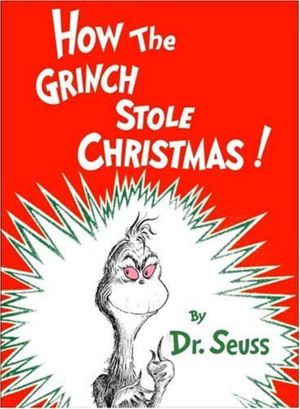
Dr Seuss is an extremely well known children's book author/illustrator, his work is very fun.
Evidently he is a fan of block colour and creates textures and shading with the basic line drawings and adds the block colour after - which is a technique that I personally use too. The apparent simplicity is something that attracts me personally to the covers.

I really like the composition of the book covers because just simply by the use of his imagery, type and colour is a clear to see that the book is not serious in any way and will attract children.


Food/Drink Packaging material

Packaging Materials
The most common types of material used for packaging are paper, fibreboard, plastic, glass, steel and aluminium.
Paper: One of the most widely used packaging materials, particularly corrugated cardboard used for transport packaging. The current recycling rate for paper and board packaging waste is 49%.
Glass: This is the most common form of packaging waste. Glass can be returned and re-used or recycled easily and a well-established recovery and recycling system exists in the UK. The first bottle-bank in the UK appeared in 1977 and today there are over 20,000. Six billion glass containers are used annually in the UK and the recycling rate is 22%.
Aluminium: This is commonly used in packaging, such as drinks cans, foils and laminates. It has a high value as a scrap metal with prices ranging from £650-750 per tonne. It can also be recycled economically - 20 recycled aluminium cans can be made with the energy it takes to manufacture one brand new one.
Steel: is a widely used packaging material for food, paint and beverage as well as aerosols. Recycling steel brings significant resource and energy savings. The current recycling rate for steel cans is 62%.
Plastic: offers several advantages over other packaging materials in its sturdiness and low weight. Even though plastic can be recycled there is a lack of facilities in the UK. The current recycling rate for plastic in the UK is 5%, with the remainder either landfilled or incinerated.
Mixed materials: packaging can sometimes have the benefits of being more resource and energy efficient than single material packaging, but combining materials makes recycling difficult. Recycling these materials is hindered by the lack of facilities and technology necessary to separate materials to avoid contamination. Mixed materials packaging can be reprocessed into other products such as floor coverings, shoe soles and car mats, incinerated to produce energy, or landfilled.

Plastics
Many plastics can be used for packaging. Examples are;

Polythene (high density) HDPE - a strong plastic used for buckets, bowls pipes etc...
PET (Polyethylene terephthalate) - a shatter proof plastic becoming very popular for drinks containers. It is shatter proof, light weight and 90% recyclable.

PVC - Polyvinyl Chloride - Used for soft drinks containers that are not pressurised.

Polythene (low density) LDPE - a softer plastic used for plastic bags, squeezy bottles for substances such as detergents. Also used for pouches containing products such as drinks and semi-solid foods. Very popular as containers of sports/energy drinks. These containers are flexible, shatter proof, and cheap to produce.

PET bottles

PET is used as a raw material for making packaging materials such as bottles and containers for packaging a wide range of food products and other consumer goods. Examples include soft drinks, alcoholic beverages, detergents, cosmetics, pharmaceutical products and edible oils. PET is one of the most common consumer plastics used.

Global statistics
Worldwide, approximately 4.53 million tons of PET were collected in 2007. This gave 3.64 million tons of flake. 2.6 million tons were used to produce fibre, 0.3 million tons to produce bottles, 0.37 million tons to produce APET sheet for thermoforming, 0.17 million tons to produce strapping tape and 0.12 million tons for miscellaneous applications. (Source: PCI)
Petcore, the European trade association that fosters the collection and recycling of PET, reported that in Europe alone, 1.36 million tonnes of PET bottles were collected in 2009 - more than 48.4% of all bottles. After exported bales were taken into account, 0.905 million tons of PET flake were produced. 0.366 million tons were used to produce fibres, 0.201 million tons to produce more bottles, 0.247 million tons to produce APET sheets, 0.066 million tons for strapping tape and 0.025 million tons for miscellaneous applications. (Source: PCI for Petcore)

Re-use of PET bottles

PET bottles are also recycled as-is (re-used) for various purposes, including for use in school projects, and for use in solar water disinfection in developing nations, in which empty PET bottles are filled with water and left in the sun to allow disinfection by ultraviolet radiation. PET is useful for this purpose because most other materials (including glass) that are transparent to visible light are opaque to ultraviolet radiation.

Food Packaging

Food Packaging
The global food packaging industry is now worth $100bn-a-year, growing 10-15% each year year. Anything between 10% and 50% of the price of food today can be down to its packaging. As the amount of rubbish we produce increases, financial and environmental costs to our world also increase.

How much waste?

According to WasteOnline, UK households produce the equivalent weight of around 245 jumbo jets per week in packaging waste. In fact, 3.2m tonnes of the 26m tonnes of household waste produced annually comes from packaging. Meanwhile, 150m tonnes of packaging waste come from industry and commerce each year.

Here's some number-crunching for you: 11% of household waste in the UK is plastic, 40% of which comes from the 15m plastic bottles we use every day. Only less than 3% of these plastic bottles gets recycled. Also, how much do you value the humble carrier bag? Fewer than 1% of the billions of plastic bags we use each year are recycled, and the majority are used only once.
To achieve a change towards more sustainable packaging, it's not just the packaging that requires alterations but also our lifestyles and habits of consumption. European law wants us to recover 50% of all our packaging and to recycle 25%, but Britain, predictably, is seriously lagging behind.

Why use packaging?

• Packaging provides a physical barrier between a product and the external environment thereby ensuring hygiene and reducing the risk of product wastage due to contamination.
• Some forms of packaging prolong the life of food.
• Some packaging is also needed for safe and efficient transportation.
• Packaging is also used to provide customers with information and instructions, for which there are some legal requirements.

Why so much waste?

• The decrease in the size of households over the decades has resulted in more people buying smaller portions of food, and thus more packaging.
• Higher living standards in the western world have led to more consumer goods and to the transportation of exotic foods over long distances requiring a large amount of packaging to maintain freshness.
• A trend towards urbanisation, which creates longer distances between food producers in rural areas and consumers in urban areas, has also led a demand for packaging.
• Other contributing factors are the increases in working families (i.e. both partners working) along with the increase in fridge and freezer ownership, which has led to a higher demand for convenience food.

Has it all gone too far?
Frankly, yes. Food packaging today is really about marketing, in an increasingly consumer world, food producers care more about competing for shelf-space than environmental consequences, and we, the consumers aren't much better. Do you consider the impact arising from the toxins and pollutants released at every stage in production and transport? Do you think about how long the packaging will take to biodegrade or incinerate, or about how some products are just economically unviable to recycle in rich countries and instead are shipped out to pollute the third world? Probably not, but maybe you should.

Shrink Sleeves


Shrink Sleeves (Speaking specifically about HP printing)

Shrink-sleeves are the fastest-growing segment in the labels market, and the ability of the HP Indigo press ws4050 to be able to print shrink-sleeves as well as conventional labels, flexible packaging and cartons, means that the press truly represents a revolution in package printing and converting.

Reverse printing is often used in shrink-sleeve printing to prevent marring and scuffing during transit. This is a technique that is easily accomplished with HP Indigo technology. It also facilitates the ‘no label’ look that is currently in vogue.

The beverage industry is the major consumer of shrink-sleeve labels and this sector is possibly the most demanding in terms of adherence to corporate identity, brand colors and print quality. HP Indigo digital printing technology readily meets these expectations and enables just-in-time deliveries and stockless supply chains, as well as rapid production.

The use of shrink-sleeves is expected to continue to expand as it eliminates the problems of printing on irregularly shaped containers and widely diverse substrates. Shrink-sleeves can increasingly be found in use on healthcare products or as part of tamper-evident security features.

The ability for a packaging printer and converter to be able to offer shrink-sleeve production using the same press as his customers’ other products are printed on gives him powerful leverage to develop new business and help his customer to expand, too.

Labels – Shrink Sleeve


As you can discover below, we offer our clients one of the widest complements of label printing and packaging decoration in North America. Shrink sleeve label production is increasingly becoming a focus and we have recently introduced Digitally printed shrink sleeve labels to several of our clients.

Shrink sleeve is a label technology in which labels are wrapped around, and shrunk tightly to conform to various shape and size containers. The “sleeves”, or labels often span the containers full 360 degrees, form top-to-bottom. This entire area provides marketers an enormous canvas in which to display powerful point-of-sale graphics and content.

Shrink sleeve technology optimizes printable label area with virtual 360-degree graphics, while accommodating extreme container contour. This flexibility is applicable to virtually any shape or size container on PVC, PET, PETG, or OPS film. UV flexographic (8 and 10-color), Rotogravure, and Digial are technologies that can be used to print shrink sleeves.

Shrink sleeve provides excellent scuff resistance, easily detected evidence of tampering and consumer-convenient multi-pack presentation. Shrink sleeve labels shrink to the container by either manual application or heat tunnels, depending on the product, and distribution requirements.

Shrink Sleeve Features
• 360 degree graphics
• Bright metallic and pearlescent effects
• Scuff resistance by reverse printing
• Contour fit
• Multi-pack presentation
Hiding of undesirable product conditions

Shrink Sleeve Label Distortion
(Dave Woods, Cal Poly San Luis Obispo)
‘...As a shrink-sleeve label shrinks around a bottle, all of the graphics on the label become distorted in proportion with the bottle’s dimensions. To compensate, all label graphics must be predistorted during process to ensure that the final label appears as the designer intended it.’

Manual Distortion of images
Image distortion is the most challenging aspect of designing a shrink-sleeve label. If distortion is not accounted for during design and prepress, then the graphics on the label will appear incorrectly. To correct this problem, label designers must determine the amount of image shrinkage that will take place when the label is shrunk around the bottle and then compensate by predistorting the images in the opposite direction during the prepress stage.
For example, say an image shrinks by five percent in a certain area, to compensate the designer expands this area of the original image by five percent, thus, when the label shrinks, the image will return to its original and intended size rather than appearing too small.’

‘Shrinkage side effect - Inconsistent colour.
Shrink-sleeve labels are also the cause of another design and prepress problem. When a label is shrunk around a bottle, the halftone dots shrink proportionally as well. In areas on the bottle where only minor shrinkage occurs, the halftone is unaffected. However, if the bottle has a smaller neck where there is a large amount of shrinkage, the dots will shrink and clump together, thus creating a super-saturated area of colour that is noticeably darker than the other areas of the bottle. (Kronemann, 2003)

If image distortion is being done manually, then the designer can desaturate those areas that will shrink the most by applying a gradient over these areas on the computer. (Kronemann, 2003)’

Drinks can printing

'Ball Packaging Europe - Can printing

Ball Packaging Europe has brought digital printing for beverage cans to market maturity. At its Hassloch plant in Germany, Ball is able to produce beverage cans printed either the conventional way or with photo-realistic custom designs with customers already using the new technology to market small special-edition production runs.

Reproducing custom designs in unprecedented quality, digital printing follows the resealable closure as a second game-changing technology able to unlock new markets for beverages cans. A digital print head applies images straight onto the can surface at resolutions up to 600 dpi. The images pass directly from computer to production line without any need to make up a printing plate. This is not just a time saver; it means every container can be printed at top quality with a different design.

Use of the CMYK color model makes for picture-perfect color reproduction. Digital printing applies inks wet on wet, one on top of the other, to match every possible shade and hue. The result is sharp, photo-realistic imagery that catches the eye on the kiosk or supermarket shelf.
This contrasts with the traditional relief process which involves determining in advance which ink to apply to which printing plate. The conventional method can handle at most six or eight different ink colors and cannot compete with digital printing for realism.

Ball Packaging developed the digital printing process jointly with its British cooperation partner, Tonejet. Tonejet contributed a new print head for precise printing of drinks cans, while Ball fine-tuned its production machinery for the new process. Ball incorporated a prototype of the digital printing press into its standard production line at the Hassloch plant in spring 2009. The manufacturer can now print in parallel on this production line using both the conventional relief method and digitally, without halting or even slowing production. The digital prototype currently has an output of 120 cans a minute, set to rise to 200 cans a minute in the future.'

http://www.ball-europe.com/

Printing for packaging

Flexographic printing:

Applications:

Flexography is the major process used to print packaging materials. Flexography is used to print corrugated containers, folding cartons, multiwall sacks, paper sacks, plastic bags, milk and beverage cartons, disposable cups and containers, labels, adhesive tapes, envelopes, newspapers, and wrappers (candy and food).

Flexographic presses are capable of producing good quality impressions on many different substrates and is the least expensive and simplest of the printing processes used for decorating and packaging printing. The use of flexographic printing presses is on the rise. There are two primary reasons for this: 1) it is a relatively simple operation; and 2) it is easily adapted to the use of water-based inks. The widespread use of water-based inks in flexographic printing means a large reduction in VOC emission compared to the heatset web or gravure printing processes.

Process Overview

In the typical flexo printing sequence, the substrate is fed into the press from a roll. The image is printed as substrate is pulled through a series of stations, or print units. Each print unit is printing a single color. As with Gravure and Lithographic printing, the various tones and shading are achieved by overlaying the 4 basic shades of ink. These are magenta, cyan, yellow and black.

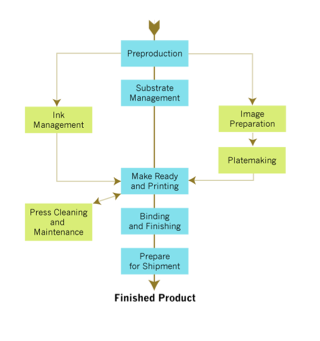
The major unit operations in a flexographic printing operation are:
• Image preparation
• Platemaking
• Printing
• Finishing
Below is a process flow diagram for flexographic printing:
Image Preparation
Image preparation begins with camera-ready (mechanical) art/copy or electronically produced art supplied by the customer. Images are captured for printing by camera, scanner or computer. Components of the image are manually assembled and positioned in a printing flat when a camera is used. This process is called stripping. When art/copy is scanned or digitally captured the image is assembled by the computer with special software. A simple proof (brown print) is prepared to check for position and accuracy. When color is involved, a color proof is submitted to the customer for approval.

Flexographic Plate Making
Flexographic and letterpress plates are made using the same basic technologies utilizing a relief type plate. Both technologies employ plates with raised images (relief) and only the raised images come in contact with the substrate during printing. Flexographic plates are made of a flexible material, such as plastic, rubber or UV sensitive polymer (photopolymer), so that it can be attached to a roller or cylinder for ink application. There are three primary methods of making flexographic plates; photomechanical, photochemical and laser engraved plates.

Flexographic Printing Presses

The five types of printing presses used for flexographic printing are the stack type, central impression cylinder (CIC), in-line, newspaper unit, and dedicated 4-, 5-, or 6-color unit commercial publication flexographic presses. All five types employ a plate cylinder, a metering cylinder known as the anilox roll that applies ink to the plate, and an ink pan. Some presses use a third roller as a fountain roller and, in some cases, a doctor blade for improved ink distribution.

Flexographic Inks
These inks consist of colorants, which may be pigments and soluble dyes along with a binder and various solvents. Both Solvent based and water based inks commonly contain various types alcohol as the primary solvent or drier. Alcohol rapidly dries through evaporation and contributes to VOC emissions. The inks may also contain glycol ether and/or ammonia which facilitates drying.
Types:
• Water Based
• Solvent Based
• U.V. Curable

Water based flexo inks dry through evaporation and absorption on paper. This evaporation requires a greater amount of fuel or energy to dry the ink. Coated papers may be used to control the absorption through the paper. Due to the speed of the presses and volume of inks consumed daily a pollution control system may be necessary, especially if the printer is using solvent based inks. If the product allows, the printer may avoid pollution control equipment if they convert to water based inks or UV curable inks.

UV flexo inks are commonly used for top coats and lacquers and are responsible for many improvements in image quality of flexographic printing. The use of UV curable colored inks is rising within the flexographic printing industry, but product concerns and equipment investment are obstacles. Note, water based or UV curable inks may not be an option for some printers due to the substrate being printed or design of the product.

Finishing

After printing, the substrate may run through a number of operations to be "finished" and ready for shipment to the customer. Finishing may include operations such as coating, cutting, folding and binding.

Off set Lithography
The function of the original stone printing surface is now served by thin aluminum plates, although other materials, such as stainless steel and plastic, can also be used. The plates are wrapped around the circumference of the printing cylinder and make direct contact with the rubber blanket cylinder. Rubber rollers carry ink and water to the plate surface. The ink is transferred first to the blanket cylinder and then to the paper.

Lithographic plates are the least expensive printing surfaces available today, and this fact has
contributed greatly to the success of the process. Aluminum plate materials have a thin surface coating of light-sensitive material, such as a photopolymer, that undergoes a solubility change when exposed to an intense source of blue and ultraviolet light. Images are transferred to the surface by exposing the plate through a film positive or negative (see Photography). Some materials can be exposed directly, as in a graphic-arts camera or by a computer-controlled laser beam, thereby eliminating the expense of film and speeding up the platemaking process.

Modern offset lithographic presses range in size from small sheet-fed duplicators—used for small, single-color jobs such as brochures and newsletters—to massive web presses capable of printing millions of copies of magazines, catalogs, mailing pieces, and packaging materials in full color. No other process has such a broad range of applications.

Rotogravure printing
Gravure, also called rotogravure, is a high-volume printing process employing an ink transfer mechanism that is fundamentally different from that of relief printing. The printing surface is a polished metal cylinder covered with an array of tiny recesses, or cells (as many as 50,000 per sq in), that constitute the images to be printed. The cylinder, which can be 2.5 m (8 ft) or more in length, is partially immersed in a reservoir of solvent-based fluid ink. As the cylinder rotates, it is bathed in ink. A steel blade called a doctor blade running the entire length of the cylinder wipes the ink from the polished surface, leaving ink only in the cells. The ink is then transferred immediately to a moving web of paper forced against the cylinder under great pressure.

Gravure cylinders are constructed of steel with a thin surface layer of electroplated copper. The copper can be either chemically etched or electronically engraved to form the cells that will transfer ink. Once the cells have been created, the cylinder is electroplated with a thin layer of chromium to produce a hard surface for the doctor blade. Each cell transfers a tiny spot of ink to the paper. The cells can be made to vary in depth from one part of a cylinder to another, causing the darkness of the resulting ink spots to vary also. This enables gravure to print a wide range of gray tones and thus to render excellent reproductions of photographic originals.

Color printing is accomplished by using separate printing cylinders for the cyan, magenta, yellow, and black inks. Each cylinder is housed in a separate printing unit. The web is transported by rollers from unit to unit and can reach speeds of close to 900 m (3000 ft) per minute. After each color is printed, the web passes through a dryer, where the solvent base of the ink is evaporated. The solvent is either reclaimed or burned to produce energy. Some gravure printers have begun to use water-based inks. This trend is likely to continue because of health and environmental threats posed by the use of hydrocarbon-based solvents.

The expense of manufacturing a set of gravure cylinders has restricted its use to long-run jobs (millions of reproductions). Mass-circulation monthly magazines, mail-order catalogs, and packaging are natural markets for the process. Gravure is also used to reproduce a variety of textures and patterns on decorative materials. Computer-controlled electronic engraving machines have reduced the time required to prepare a set of cylinders, but they are still far more expensive than lithographic printing surfaces.

Sequence

Designed by Sequence | Country: United States
“Chipotle Mexican Grill is one of the fastest growing restaurant-chains in the U.S. Its goal is to change the way the world thinks about and eats fast food by serving high-quality and sustainably-raised food quickly and affordably. We created a new packaging system defined by unique, hand-drawn messages from customers, employees and even ingredients. This lighthearted, passionate approach is a perfect vehicle to convey Chipotle’s ‘un-chain’ philosophy.”


I love this packaging for the U.S restaurant. Its very fun and visually enaging - for example, if you got given some food in one of those paper bag, in my opinion, you would be much more likely to read all of that rather than something that was typed out on a computer and very structured and I would say this is definately down to the hand crafted nature of the type and the fun, unstructured layout.